| Cinema
A cut above the rest
By golly, Ireland's film censor is human after all
By Pól Ó Conghaile
Phat Traffic Productions
 So
there you are in the cinema, the house of a thousand dreams. You've bought
your ticket, taken your seat, sunk into that moment when the lights go
down. The projector whirls, the trailers splutter into action and the first
few knots of popcorn spill onto your lap. Finally, the film begins, and
sighing with relief you're off into the land of make-believe.
Or rather, it will begin -- in 10 seconds after a mysterious black certificate
fizzles across the screen -- bilingual, centered around two digits or a
pairing of letters, signed with the simple moniker: "SS." Suddenly, it's
gone.
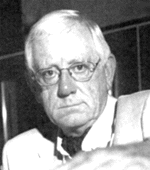
Behind those initials (surprise, surprise) lies a human being. Sheamus
Smith, to be precise. And he cannot, no more than the rest of us, be categorically
defined by his choice of employment as the official Irish film censor.
Sure, he may view upwards of 300 films a year in his own private cinema,
but he's a keen golfer too (6 a.m. tee-offs), and a well-traveled individual.
He's a man who came by his government-appointed position via work as
a photographer in Ireland and Canada, a course in Film and Television at
the University of British Columbia, a motley and highly successful career
as cameraman and producer at Telefís Éireann. A man who,
by the time he left RTE to become a freelance director and producer, had
risen to become editor of the station's principal current affairs show,
7 Days.
The job for which Smith was destined had an equally adventurous upbringing.
Established in accordance with the Censorship of Films Act of 1923, the
Office of Film Censor was designed to shield viewers from celluloid material
deemed "indecent, obscene, blasphemous... or tend(ing) to inculcate principles
contrary to public morality."
Granted wide powers with which to change or develop classification systems
and issue certificates accordingly, the first film censor, James Montgomery,
served for 17 years (during the first of those, banning almost 50% of submitted
films). Smith, Ireland's current censor, was the eighth person to have
held the position. As of this year, he was the second longest serving in
the history of the State.
"In the early days, the film censor's signature was reputedly better
known than that of the governor of the Central Bank, which appeared on
every banknote!" laughed Smith. Today, he claimed, films are rarely banned.
And curiously, he'll go as far on this point as to claim "censorship"'
of films "does not, in fact, really exist." Since his appointment, he has
been endeavoring to have the title of film censor changed "to something
more appropriate for the present day" - albeit, he said, "with little success."
Speaking from his office on Harcourt Terrace, Smith extrapolated.
"Personally, I look upon the office as one of classification and find
'censorship' an emotive and unnecessary word. My own policy is not to cut
films."
He believed that a movie was the work of a director and that was is
an arrogance for anyone else to reconstruct it. The difficulty, it
turned out, is that Smith's title is contained in legislature and any change
would require an Act of the Oireachtas - the routes to which are often
labyrinthian. The result? "I tend to look upon myself as a film classifier,
in common with my colleagues in most other countries," he explained.
He asserted that he did not spend his days watching all kinds of depravity,
violence and porn and does not have an archive of cuts made in films.
The Office of the Film Censor is self-financing. In fact, as an associate
office of the Department of Justice, Equality and Law Reform, its contribution
to the Exchequer (especially since the proliferation of video) has been
considerable. "The cost to a distributor for classifying a feature film
is, on average, £800," as Smith outlined. "A license for a video
sales or rental outlet is £100 per annum and, for a wholesaler or
distributor, £1,000 over the same period."
Revenue from these areas enables the current office to host a staff
of 19, a figure which includes eight civil servants, two projectionists,
one full-time and seven part-time assistant film censors. The film censor
looks after movies for cinema exhibition, but his assistants must comb
through approximately 3,000 videos each year.
Once viewed, films are classified according to Ireland's current system:
General, Parental Guidance (PG), Over 12s, Over 15s and Over 18s. Statistics
show the vast majority fall into the 15s category, followed closely by
18s - and they rankle. "Personally, I think this is a pity, as children
today cannot learn to love or appreciate cinema as I and many others could
when we were young. Great producers and directors like Cecil B. de Mille,
Sam Goldwyn, Alfred Hitchcock, John Ford, Alexander Korda and David Lean
managed to make movies, many of which are now classics suitable for all
audiences," he asserted, adding that "sadly, the level of violence, language
and sex contained in films today invariably warrants higher classification."
In 1976, at the behest of then Minister for Industry and Commerce, Justin
Keating, Smith took the position of managing director at Ardmore Studios.
Seven years later he left to play the freelance game, working as director
and producer on a number of international projects, including Peter Ustinov's
People. Amazingly, Smith's program team was in the garden with Indira Ghandi,
prime minister of India, when she was assassinated in 1984.
Smith enjoys his job and the movies that go along with it. His favorite
film is Casablanca. He asserted that "the cinema was the greatest influence
on my young life - greater than school, family or friends." He'll occasionally
marry enjoyment with the responsibility, too. "If something is interesting
or particularly relevant," Smith invites a friend to a special screening,
usually on Friday afternoons. And yes, he still goes to the pictures.
"You must remember that I see a film alone, or perhaps with its distributor,
in my own private cinema. I also have a script of the film, so every sound
or word on the soundtrack is heard. This doesn't always happen in cinemas
where people are moving in and out, or where there's applause or laughter
or other distractions. So it's important to go along to see how a general
audience receives a particular film. Also, if something is of interest
to someone I know, I might take them along to see what they think of it,
or in fact to experience their enjoyment of a film," he continued.
At the end of the day however, it was what went through Sheamus Smith's
mind in that small, private cinema that determines the classification of
films
in Ireland. "I am more concerned with violence, particularly that which
can easily be replicated with knives, bottles or objects found in the average
home, than with sex as has been the case with many of my predecessors,"
Smith added.
He has banned seven films since he was appointed in 1986. Yet he has
lifted bans previously imposed on films like Ulysses, The Life of Brian
and A Clockwork Orange -- showing how the censor's office has changed
with the times.
Just as films are changing, so too is the audience. "Ten years ago,"
Smith pointed out, "there were five million admissions to cinema. Now the
figure stands at 15 million and rising." Per capita, these figures render
Dublin the greatest cinema-going population in Europe. Appreciation of
cinema is also growing in sophistication, and the censor believed his standards
of classification were adapting accordingly. He took issue with the argument
that Irish classification is stricter than elsewhere.
But still there are those who believe he was not going far enough. Smith
might very well point out that in 1971 alone, 24 feature films were banned
in Ireland, and that his total thus far is was that mere seven. However,
young Irish still question the process, usually affirming that they should
be in the position to view films and make their own decisions on their
content.
The most high profile of Smith's banned films were Natural Born Killers
and From Dusk 'til Dawn -- both of which featured, in his opinion,
"an unacceptable level of gratuitous violence."
Though he believed the role of the censor to be much less controversial
than previously, Smith did recognize that, as media proliferate, life was
becoming increasingly difficult "for those who classify films and video."
However, he did have an engaging point to make as regards the static nature
of the 1923 legislation. The Act, he said, is "vague enough in its guidelines
to allow censorship or classification to progress with the times."
Michael Collins was a winning example of how such flexibility of interpretation,
when carefully handled, can work to society's advantage. At the time of
that film's release, producer Neil Jordan commented that he had "never
lost more sleep over the making of a filmŠbut I'll never make a more important
one."
Jordan's words snugly fit Smith's experience spent classifying the film.
Following several viewings, he eventually granted it a PG certificate,
issuing in tandem a press statement that said the film was a landmark in
Irish cinema.
While an Irish film censor had never before commented on the quality
or content of a film, Smith stood by his decision. "I believe that because
of the subject matter, parents should have the option of making their own
decision as to whether their children should see the film or not," he said.
In an interesting addendum, and perhaps an illustration of the censor's
power over audiences and distributors alike, Michael Collins subsequently
became the second most successful movie ever released in Ireland, netting
more than £4 million in box office receipts.
With any banned films there is always recourse to the Films Appeal Board
and the opportunity of resubmission after a mandatory seven-year waiting
period. "I may have a different attitude or society may be different from
when I made the original decision," Smith said, which gives some faint
hope to one-the-edge producers.
Some in Ireland still feel that the censor is far too liberal. Smith
was more aware of this than most. He gets letters on the issue from all
sides. Last year, the following came from a lady in Kerry regarding one
film.
"There is no censorship," she wrote. "You're being paid to censor films
but you don't do it. This film is full of nudity and gratuitous sex, but
you are permitting 15-year-old children to view it! You are possessed by
Satan to offload that extreme, obscene material on us!"
The film in question? Shakespeare in Love, winner of the 1999 Oscar
for Best Picture.
And with that, the mysterious certificate fades, the initials SS dissolve
from immediate memory, and we slip into the next film, the next 90 minutes
of manufactured, wholly enjoyable dreams.
Save for Sheamus Smith, that is. He's already deciding what's cool for
summer, 2001.
Copyright Phat Traffic Productions
|
|